Breaking: When the NFL returns to Paris. Just imagine.
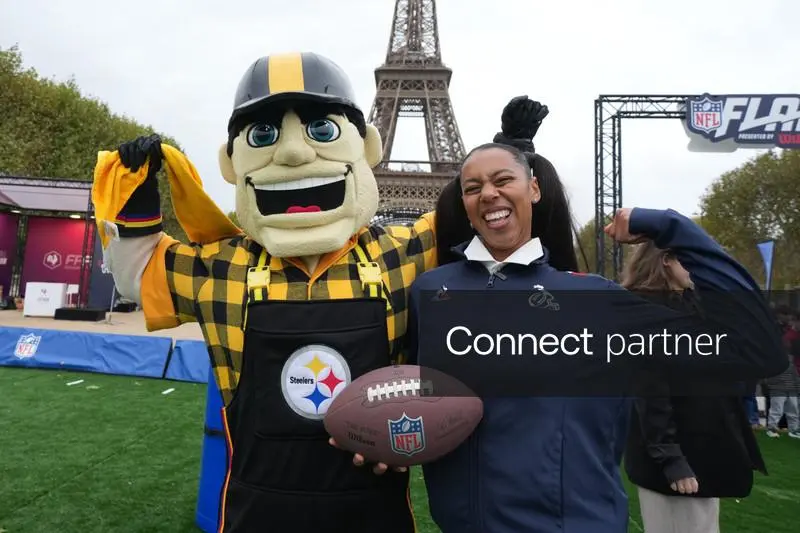
Paris, France. The City of Light has seen its share of invasions. The Romans, the Vikings, the Allies in 1944. But nothing quite prepared the French capital for the surreal, deafening, utterly American spectacle that unfolded Sunday night at the Stade de France: the National Football League, in the flesh, playing a regular-season game on Parisian soil for the first time in history. The NFL’s long-awaited return to Paris, nearly three decades after the league’s short-lived European spring experiment, was less a football game than a cultural collision, a Super Bowl-sized block party dropped into the middle of a country that worships at a different sporting altar. And yet, by the time the final whistle blew on a 27-24 overtime thriller between the Green Bay Packers and the New Orleans Saints, the 80,000-seat stadium on the northern edge of the city had been converted. “I came for the spectacle,” said Amélie Rousseau, 34, a Parisian schoolteacher draped in a cheesehead she had purchased hours earlier outside the stadium. “I stayed for the sport. I think I understand it now. It is like rugby, but with more commercials and more drama.”
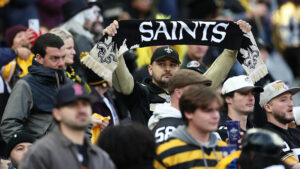
That drama arrived early. The NFL, which has spent two decades methodically building its international footprint through London, Mexico City, Munich, Frankfurt, and São Paulo, chose Paris with the precision of a chess grandmaster. France is the league’s fastest-growing European market, with merchandise sales up 62 percent year-over-year and a fan base the league estimates at 4.5 million. The game sold out in 19 minutes. Secondary market tickets reportedly fetched four figures in euros. From the moment the gates opened at 3 p.m. local time, the Stade de France resembled a bilingual carnival. Tailgaters, a concept the French initially regarded with polite bewilderment, grilled merguez sausages alongside hot dogs. A brass band played “When the Saints Go Marching In” while a nearby group of Packers fans, decked in green and gold, attempted a rendition of “La Marseillaise.” Beer flowed. The wave broke out in the 12th minute of the first quarter, long before any scoring. Inside the stadium, the NFL had transformed the venue into a red, white, and blue, and, fittingly, green, gold, and black, cathedral of Americana. The end zones were painted with the league’s Paris 2025 logo. An enormous tricolor flag was unfurled during the national anthems, both of them, “La Marseillaise” followed by “The Star-Spangled Banner,” the latter sung by a French-American chanteuse who brought the house down with a soaring final note. The game itself was a gift to first-time viewers: a back-and-forth affair that featured four lead changes in the fourth quarter. Packers quarterback Jordan Love threw for 312 yards and three touchdowns, including a 44-yard strike to Romeo Doubs that silenced the Saints’ sideline. Saints running back Alvin Kamara, playing the role of crowd favorite, answered with 118 rushing yards and a pair of scores, including a 6-yard plunge that sent the game to overtime. In the extra period, Packers kicker Anders Carlson, whose job security had been a topic of breathless speculation all week, drilled a 41-yard field goal that sent the French crowd into a frenzy of confusion and delight. Many stayed in their seats for several minutes afterward, unsure of the protocol, before the public address announcer, in flawless French, explained that the game was, in fact, over. “It was chaos, but beautiful chaos,” said Saints head coach Dennis Allen. “The crowd didn’t always know when to cheer, but when they did, it was loud. I mean, really loud. I’ve coached in domes. This was different.”
The NFL’s Parisian experiment is not a one-off. League officials confirmed that a multi-year agreement is in place with the French government and the Stade de France consortium to host at least one game annually through 2028, with the possibility of expanding to two games per season. The league is also exploring a permanent Paris office and a partnership with the French rugby federation to cross-promote the sports. This is not a novelty act,” said NFL Commissioner Roger Goodell, speaking at a press conference beneath the stadium’s sweeping roof. “Paris is a global city, and we intend to be a global league. Today was a statement. The next step is to make it feel routine, a Sunday in autumn where Parisians check the NFL schedule the way they check the Ligue 1 table.”
That ambition will face headwinds. The game lasted nearly four hours, a duration that tried the patience of a crowd accustomed to 90-minute football matches with a single 15-minute break. The NFL’s stop-start rhythm, huddles, timeouts, replay reviews, and the dreaded commercial break, drew audible grumbles in the third quarter. Some fans left early. Others pulled out their phones to check the score of the evening’s Ligue 1 match between Paris Saint-Germain and Marseille. And yet, the sheer novelty carried the night. The halftime show, a mashup featuring French rapper Ninho and American hip-hop legend Lil Wayne, was a chaotic, cross-cultural fever dream that somehow worked. The concession stands sold more than 40,000 hot dogs and 60,000 beers, along with a surprisingly popular “Parisian Packer” sandwich of ham, brie, and Dijon mustard. The league’s merchandise tents were picked clean by the third quarter, with cheesehead hats and Saints jerseys the top sellers. For the players, the experience was unforgettable. “I’ve played in Mexico City, I’ve played in London,” said Packers linebacker Rashan Gary, who recorded two sacks. “But Paris? Man, the energy was different. They appreciated the big hits. They appreciated the deep balls. They just wanted to see something spectacular.”
As the final seconds ticked off the clock, the stadium lights dimmed, and a fireworks display erupted over the Seine-Saint-Denis skyline. The crowd, a mix of expats, curious Parisians, and hardcore fans who had flown in from Wisconsin and Louisiana, lingered, singing along to a postgame playlist that included Daft Punk’s “One More Time.”
Whether the NFL can turn this into a lasting romance remains to be seen. But for one crisp autumn night in the French capital, the impossible happened: Parisians stood, cheered, and argued about play-calling. The City of Light had learned a new language. And it was loud.
“I still do not understand what a ‘down’ is,” admitted Rousseau, the schoolteacher, as she filed out of the stadium with her cheesehead tucked under her arm. “But I will be back next year. And I will bring my brother. He is a difficult man. But he loves a good show.”
The NFL, it seems, has found its newest convert. And Paris, ever the gracious host, has found a new reason to stay up late on Sunday nights.





Post Comment