


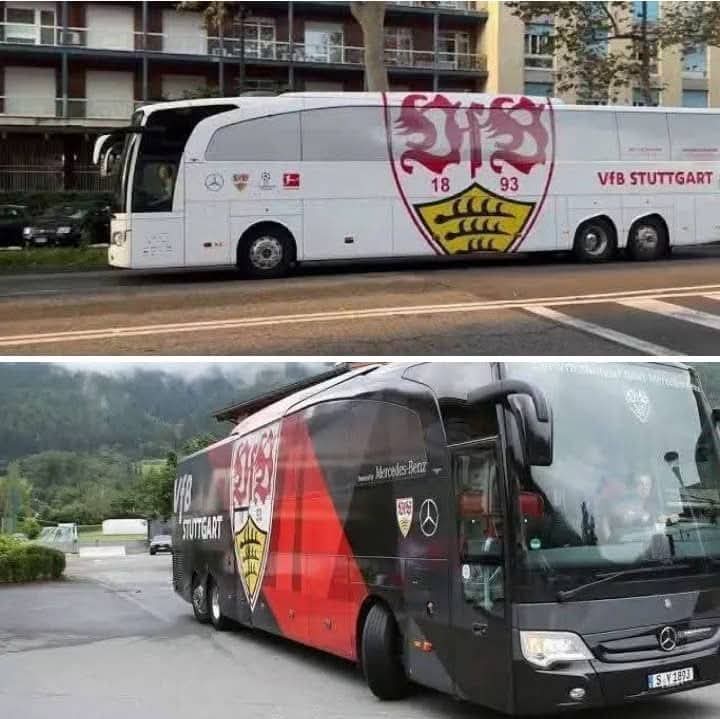
VfB Stuttgart’s Future on Wheels: A Revolution in Football Travel
In the relentless world of professional football, success is often determined by the smallest of margins — a split-second decision, a fraction of a meter, a moment of fatigue. Clubs invest millions in training facilities, sports science, and data analytics, all in pursuit of a competitive edge. But one area has remained surprisingly old-fashioned: team travel. That is, until now. VfB Stuttgart has unveiled a bold vision for the future — a fully-automated, AI-driven electric team bus that promises to transform how players prepare for match day.
Forget the cramped, noisy, and often outdated coaches that have ferried generations of footballers to stadiums. Stuttgart’s new “future on wheels” is nothing short of a revolution. These electric giants glide silently through the streets, guided by advanced artificial intelligence navigation that ensures the smoothest, most efficient routes possible. No sudden braking, no aggressive acceleration — just a seamless, comfortable journey that allows players to arrive relaxed and focused.
But the innovation does not stop at automation. Inside, the bus is designed as a mobile high-performance center. Regeneration seats, equipped with massage functions and ergonomic support, pamper players during the ride, helping to loosen tight muscles and promote blood circulation. What used to be dead time — the hour-long trip to the stadium — has been transformed into an opportunity for recovery. For athletes whose bodies are their most valuable asset, this is a game-changer.
Perhaps the most striking feature, however, is the tactical integration. The bus is fitted with interactive tactical displays that turn every journey into a rolling strategy hub. Coaches can hold video sessions, review opponent formations, or make last-minute adjustments to the game plan — all while en route to the match. Sebastian Hoeneß, VfB Stuttgart’s head coach, has reportedly described this as a real competitive advantage. In a sport where preparation is everything, having an extra hour of focused, high-quality tactical work could make all the difference.
The psychological impact should not be underestimated either. Arriving at a stadium in a state-of-the-art, AI-powered vehicle sends a message — to opponents, to fans, and to the players themselves. It says: we are forward-thinking, we are serious about excellence, and we leave nothing to chance. For a club like VfB Stuttgart, with its rich tradition but also its ambition to compete with financially stronger rivals, such innovative thinking levels the playing field.
Of course, the bus is reportedly sponsored, highlighting how partnerships can drive progress in football infrastructure. But beyond the commercial aspect, this initiative represents something larger: a recognition that every detail matters. From the moment players leave their homes to the moment they step onto the pitch, their environment should be optimized for performance.
Critics might call it overkill — just another expensive gadget in an already lavish sport. But for players who have endured countless bumpy, noisy, and uncomfortable bus rides, the difference will be tangible. And if those regeneration seats and tactical screens contribute to even one extra win per season, the investment will have paid for itself.
VfB Stuttgart is not just changing how it travels. It is rewriting the rules of football preparation — one silent, AI-guided mile at a time. The future of football has arrived, and it rides on wheels.
