


Written by SportMics —Sports Amplified
In the Southeastern Conference, November has always carried a certain rhythm. Rivalries tighten. Stakes rise. Teams either solidify their playoff credentials or fade from the national conversation. But alongside the intensity, another familiar tradition shows up on the schedule every year — one the SEC has long defended, but one the national college football audience is no longer willing to ignore.
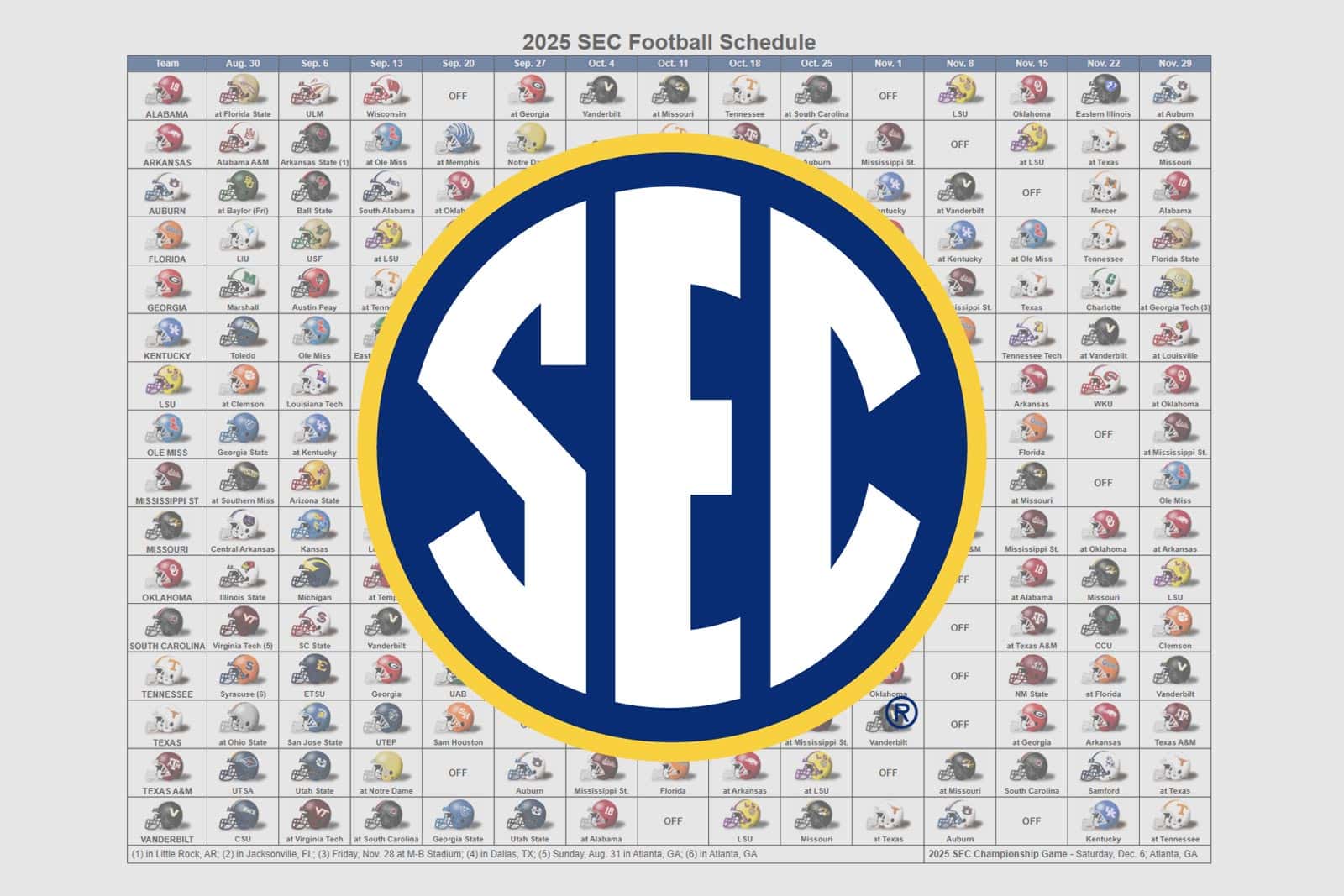
The annual slate of late-season non-conference “cupcake” games is back in the spotlight, and this time the criticism is louder, sharper, and more consequential than ever. As the College Football Playoff race tightens, analysts and fans are asking the same pointed question: Is the SEC hurting its own chances by scheduling weak opponents in the most important month of the season?
The critique isn’t new. But the urgency around it is.
A Tradition Under Pressure
For decades, SEC teams have used November non-conference games as strategic breathers — opportunities to rest starters, tune up schemes, and avoid unnecessary injuries before the season’s final rivalry showdowns. Schools have also argued that these games inject needed revenue into smaller programs who rely on the payouts to fund entire athletic departments.
But this year, the tone of the national conversation has shifted. The issue isn’t simply optics. It’s about competitive balance in a playoff era where strength of schedule is weighted more heavily than ever.
One recent national column captured the sentiment bluntly:
“SEC football must eliminate November cupcake games before it impacts the CFP race.”
And that’s exactly where the tension lies.
A Playoff Year With No Margin for Error
In 2025, the SEC is deeply entrenched in the playoff conversation. Texas A&M sits comfortably in the top four. Alabama remains on the bubble, evaluated week to week. Several teams are jockeying for ranking position, bowl leverage, and national respect.
But November’s soft matchups — games often played against overmatched opponents with losing records — are now being viewed as potential liabilities.
Analysts argue that late-season lopsided games carry three major risks:
1. Weak résumé at the wrong time.
Committee members have repeatedly emphasized the value of strong finishes. Beating a 2–7 FCS opponent does little to strengthen a playoff case.
2. Lost opportunities to impress.
Teams outside the top four need meaningful wins late in the year. Playing a low-level non-conference opponent provides no headline, no ranking boost, and no narrative momentum.
3. Openings for competitors.
While SEC teams face weaker opposition, contenders from other conferences are earning résumé-building victories — something that could sway the committee when margins are thin.
The message from national voices is becoming clear: November matters too much to waste.
The Case Against the Critics
Inside the SEC footprint, however, the pushback is just as passionate.
Administrators and coaches defend these games on several fronts:
Financial support for smaller schools.
Guarantee games can provide upwards of $1 million for a single appearance — money that keeps athletic departments afloat.
Rivalry preparation.
Late November often ends with emotionally charged rivalry games (Iron Bowl, Egg Bowl, Palmetto Bowl). Coaches value the ability to work on depth and avoid attrition before those contests.
Scheduling realities.
The SEC maintains one of the toughest conference slates in college football. November breathers help balance a brutal eight-game league schedule that begins in early September.
But even with those arguments, national perception is hard to ignore — and perception is precisely what influences the CFP committee.
Why This Year’s Criticism Feels Different
Ordinarily, complaints about SEC cupcake games fade after a week. But in 2025, the stakes are amplified:
The playoff bubble is crowded.
The SEC’s top-tier teams are under more scrutiny.
The race for seeding is tight, with the difference between No. 3 and No. 5 potentially coming down to résumé strength.
As one analyst put it this week, “When everyone else is playing for survival and the SEC is playing tune-ups, it’s hard to pretend the playing field is even.”
The concern isn’t just about fairness; it’s about risk. If the committee begins penalizing late-season scheduling softness — even subtly — it could reshape the SEC’s strategy.
Texas A&M and Alabama at the Center of the Debate
Two SEC programs were specifically mentioned by analysts in the week’s CFP discussions:
Texas A&M:
Despite holding one of the best strength-of-record profiles in the country, the Aggies are still facing external questions about the quality of their remaining schedule. Their comeback win over South Carolina fueled conversations, but so did the rest of their November slate.
Alabama:
The Crimson Tide sit on the playoff edge, their résumé not quite strong enough to guarantee anything. With the committee evaluating them weekly, analysts warn that a November cupcake game could become a tiebreaker — and not in Alabama’s favor.
If the SEC’s scheduling tradition ends up influencing the postseason race, it may spark accelerated change.
The Road Ahead: Is Reform Coming?
Several industry voices are already predicting that the SEC will eventually adjust its November philosophy — not because it wants to, but because the modern playoff environment may demand it.
Possible solutions being discussed nationally include:
Replacing November non-conference games with conference matchups
Moving tune-up games to early September
Creating mandatory late-season minimum schedule requirements for playoff eligibility
A league-wide scheduling reform to maintain CFP competitiveness
Nothing is official. But the pressure is building.
A Tradition at the Crossroads
Whether one sees November cupcake games as a scheduling flaw or a misunderstood tradition, one truth is becoming clear: the conversation is no longer harmless background noise. It’s a storyline with playoff implications, national scrutiny, and growing urgency.
The SEC has built its reputation on dominance. But in a playoff era where every week is judged, every résumé dissected, and every impression magnified, the conference may soon have to decide whether November traditions are worth the risks.
Because in 2025, one thing is undeniable — the debate is no longer about optics. It’s about outcomes.
