


Written by SportMics —Sports Amplified
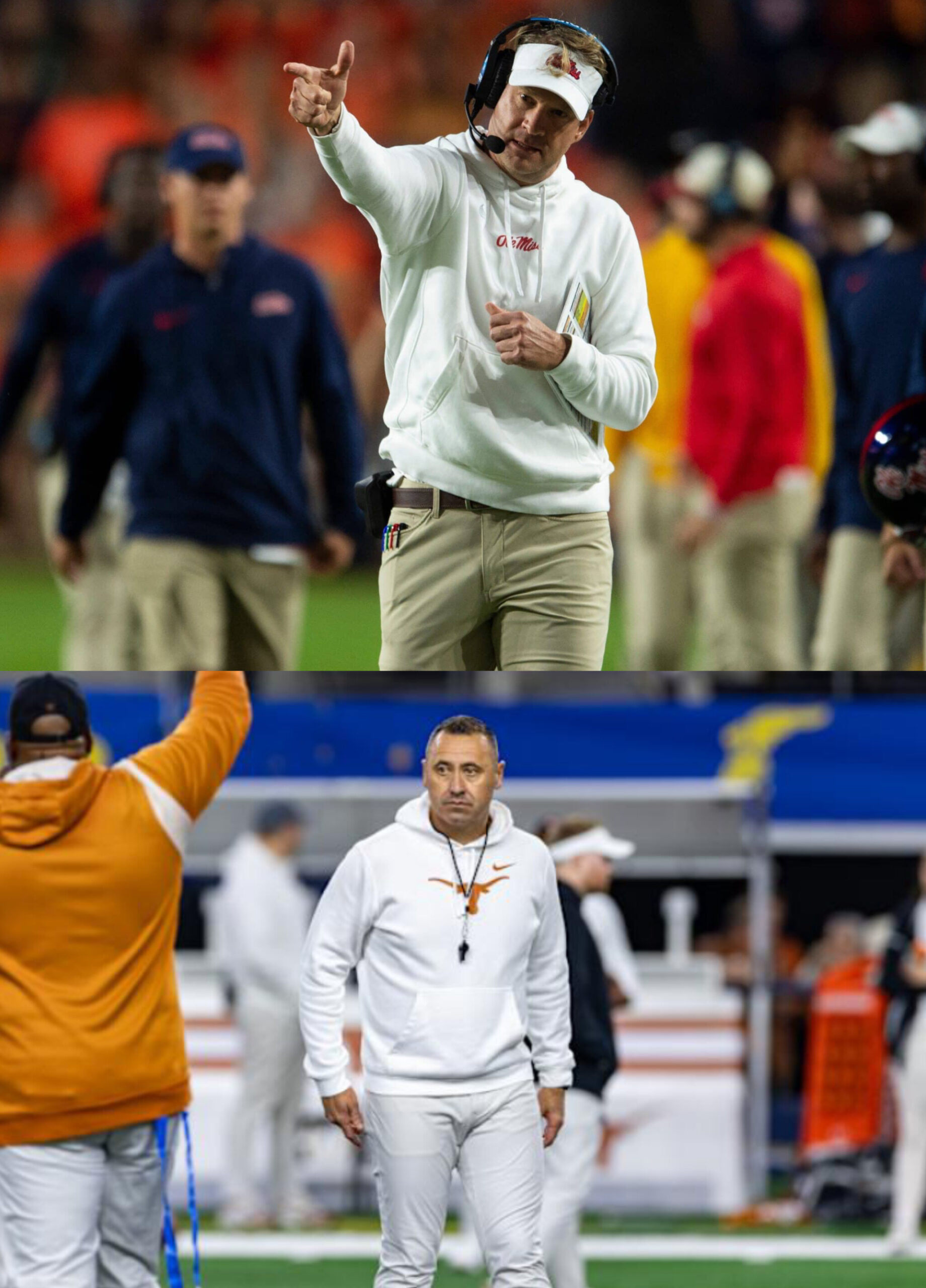
In the Southeastern Conference, where competition never cools and speculation spreads faster than highlight reels, two head coaches are navigating the same storm but steering their programs with wildly different approaches. On November 20, a comparative report spotlighted a compelling contrast between Ole Miss head coach Lane Kiffin and Texas Longhorns head coach Steve Sarkisian—two men facing heavy coaching-rumor noise yet responding in ways that reveal sharply different leadership philosophies.
The report shed light on the realities behind the press conferences, the whispers, and the social-media churn that often define coaching narratives in the late-season SEC environment. And in a year where both Ole Miss and Texas have been thrust into national conversation for very different reasons, the contrast between these two head coaches has become a storyline of its own.
Kiffin’s Silence: A Calculated Stillness in a Chaotic Market
For Lane Kiffin, the 2025 season has been a showcase of consistency. His Ole Miss Rebels stand at 10-1, one of the SEC’s strongest records, and the program’s trajectory continues trending upward. Naturally, with LSU and Florida both the subject of national rumor cycles in recent weeks, Kiffin’s name has been floated as a premium candidate.
And yet, on November 19, as the speculation reached its loudest point, Kiffin chose the route he has maintained all season: silence. No denials. No confirmations. No cryptic comments. Just a complete refusal to engage.
His approach is striking in a conference where even the hint of a coaching rumor tends to ignite press conferences, statements, and emotional social-media rebuttals. Kiffin has chosen to say nothing—an unusual discipline in a sport where headlines can steer momentum.
But that silence is not passive; it is strategic. For a coach leading a team with an outside shot at the College Football Playoff, any distraction—internal or external—can distort focus. Kiffin understands that speculation, if he feeds it, becomes oxygen for chaos. By refusing to engage, he doesn’t just control his narrative—he eliminates it entirely.
Within his program, that steadiness matters. Players notice when a coach is rattled. Recruits notice when a coach is defensive. Boosters notice every small gesture. Silence, in this case, is not absence. It is a signal: the only thing that matters right now is football.
Sarkisian Takes the Microphone—and the Message
On the other side of the SEC footprint, the mood around Texas has been dramatically different. The Longhorns’ loss to Georgia on November 19 dealt a damaging blow to their playoff hopes, dropping them to No. 17 in the latest CFP projections. In a moment that required clarity, stability, and reassurance, head coach Steve Sarkisian chose to confront swirling rumors directly.
Reports have noted that Sarkisian has taken a firm stance against speculation about his future, publicly pushing back against rumors linking him to outside opportunities. His approach is not about silence—it’s about setting the record straight.
In doing so, Sarkisian demonstrates a leadership style rooted in communication. While Kiffin protects his program by withholding words, Sarkisian protects his by supplying them. His message to players, fans, and recruits is straightforward: I am here, I’m committed, and I’m not entertaining outside noise.
This strategy reflects the environment surrounding Texas at this moment. Unlike Ole Miss, whose season has been defined by momentum and stability, the Longhorns are navigating a moment of vulnerability—one that could worsen if uncertainty is allowed to grow. Sarkisian’s insistence on addressing rumors doesn’t just manage perception; it reinforces belief.
Two Coaches, One Spotlight, Two Very Different Playbooks
The contrast between the two SEC personalities—both experienced, both respected, both intensely competitive—has become one of the most fascinating subplots in the conference’s late-season narrative.
Kiffin, ever the strategist, opts for discretion and internal focus.
Sarkisian, the communicator, opts for transparency and public reassurance.
Their differing approaches reveal deeper truths about coaching identity in modern college football:
📌 Kiffin trusts the results.
Winning speaks louder than explanations, and at 10-1, his Rebels are positioned to let their on-field performance set the tone.
📌 Sarkisian trusts the message.
With Texas sliding to No. 17 and desperately in need of unity, he recognizes he must supply the stability that recent results have not.
These choices are not accidents. They are reflections of the conditions each coach lives in, the culture of each program, and the external pressures shaping their respective seasons.
The Human Side Behind the Headlines
While fans and analysts debate the merits of silence versus transparency, there’s a human story sitting beneath the headlines. Coaches are not just tacticians; they are public figures navigating emotional rooms, locker rooms, and recruiting rooms.
Kiffin’s silence is protective—shielding his players from distractions during a potentially historic season. His quiet presence is steadiness in an SEC world that rarely offers any.
Sarkisian’s openness is protective in a different way—reassuring a team coming off a brutal loss that their leader isn’t wavering or exploring a way out. His voice becomes the anchor, when momentum cannot.
Both strategies, in their own ways, are deeply human responses to pressure, scrutiny, and expectation.
What This Means Moving Forward
As December approaches, the coaching carousel will only accelerate. Programs will make decisions. Rumors will evolve. And both Kiffin and Sarkisian will continue balancing their programs’ stability with the realities of the sport’s business side.
But the November 20 report captured something larger than a rumor cycle—it captured two philosophies of leadership unfolding in real time.
Whether silence or transparency proves more effective is a question the season will answer. What’s clear now is that in a year defined by uncertainty, both Ole Miss and Texas are following the tone set by their head coaches.
And in the SEC, tone often becomes momentum. Momentum becomes results. And results shape futures.
Two coaches. One conference. Two entirely different ways of handling the noise.
And the college football world is watching both very closely.
