


Written by SportMics —Sports Amplified
The Cougars are no longer flying under the radar. This week, ESPN’s advanced analytics model projected BYU to finish the 2025 regular season at 11-1, making them the top statistical favorite to win the Big 12. And as soon as the numbers hit the screen, social media did what it does best — exploded.
From Cougar faithful chanting “We told you so!” to rival fans scrambling to poke holes in the math, the internet hasn’t stopped buzzing. But beyond the memes and debates, the data paints a very real picture: BYU isn’t a Cinderella story anymore. They’re a legitimate powerhouse with the metrics to back it up.
From Underdogs to Algorithms’ Darlings
When BYU joined the Big 12, analysts questioned their readiness to compete week in and week out against Power Five depth. Fast forward to late October 2025, and the same analysts are eating their words.
According to ESPN’s Football Power Index (FPI), BYU has the highest remaining win probability in the conference. The model cites three things:
1. Offensive efficiency — ranked among the top 15 nationally.
2. Turnover margin — one of the best in the league.
3. Strength of schedule — tougher than most other Big 12 contenders.
Translation? BYU isn’t just winning — they’re winning in ways that make statisticians drool.
Fans Light Up the Internet
The analytics drop hit ESPN’s broadcast midweek, and within minutes, Cougar Nation had turned X (formerly Twitter) into a blue-and-white celebration thread.
“BYU’s taking receipts!” wrote one fan.
“ESPN finally catching up to what we’ve been watching all year!” said another.
Within an hour, hashtags like #BYUtoThePlayoff and #CougarMath were trending nationwide.
For a fanbase known for loyalty and optimism, this was more than validation — it was a moment of pride. The program’s rise from an independent outsider to a Big 12 front-runner feels like destiny fulfilled.
Inside the Numbers
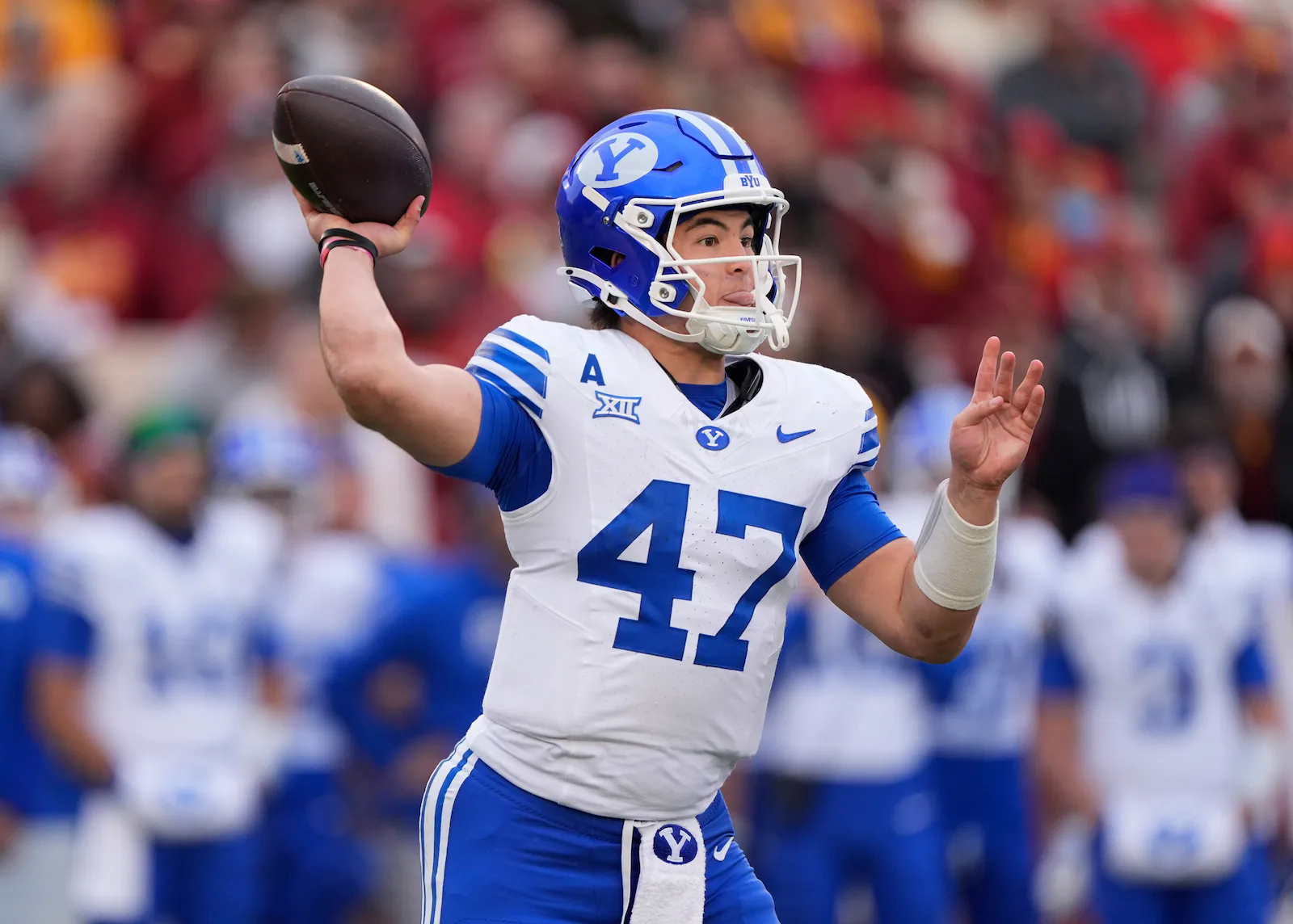
Behind every prediction, there’s a story. The model’s 11-1 projection assumes BYU maintains its current pace on both sides of the ball. Bachmeier’s emergence as a calm, efficient leader has stabilized the offense, while the defense — underrated early on — has grown into a turnover-forcing machine.
BYU ranks among national leaders in red-zone scoring efficiency, third-down defense, and special-teams production. It’s a rare trifecta that has powered their surge. Analysts have taken notice, but perhaps more impressively, so have their peers. Opposing coaches now speak about BYU with a tone of respect once reserved for the Big 12’s blue bloods.
The Bigger Picture
Of course, projections are just that — projections. The Cougars still have to navigate a late-season gauntlet that includes Texas Tech, Utah, and a dangerous road trip to Cincinnati. But the math, for once, is on their side. And that’s new territory for a team that’s spent much of its modern history fighting for recognition.
Head coach Kalani Sitake isn’t buying the hype — at least not publicly. “Numbers don’t win games,” he told local media, smiling. “But they can show we’re doing something right.”
That blend of humility and quiet confidence has defined this roster. They celebrate, yes, but they also prepare like they’re still chasing something. And in a sport where momentum is half the battle, BYU seems to have all of it.
More Than Just Stats
The numbers may be analytical, but the story is deeply human. It’s about a program that’s worked its way from independence into the national spotlight, one disciplined game at a time. It’s about players who were told they’d struggle to recruit, compete, or contend — and have since shattered every expectation.
And it’s about fans — millions of them — who stuck around through the uncertainty, now finally seeing their faith rewarded in the most data-driven way possible.
The ESPN projection might be just one model. But for BYU, it’s also a symbol.
A sign that the numbers have finally caught up to the reality on the field.
A reality where the Cougars are no longer the Big 12 newcomers —
they’re the standard everyone else is chasing.
