


Written by SportMics —Sports Amplified
CLEMSON, S.C. — The age-old showdown between the Tigers and the Gamecocks may be headed for the most lucrative weekend in American retail: Black Friday. A newly revealed scheduling clause in the contract between the two schools includes the option for the 2027 meeting in Columbia to take place on Friday, Nov. 26, rather than the traditional Saturday slot.
A Rivalry in Transition
For decades, the “Palmetto Bowl” has stood as one of college football’s most storied in-state rivalries. Traditionally held on a Saturday near Thanksgiving, the game has become a fixture of South Carolina’s fall identity. But this new contract clause signals something bigger: a strategic re-thinking of tradition in favor of media-market leverage and national attention.
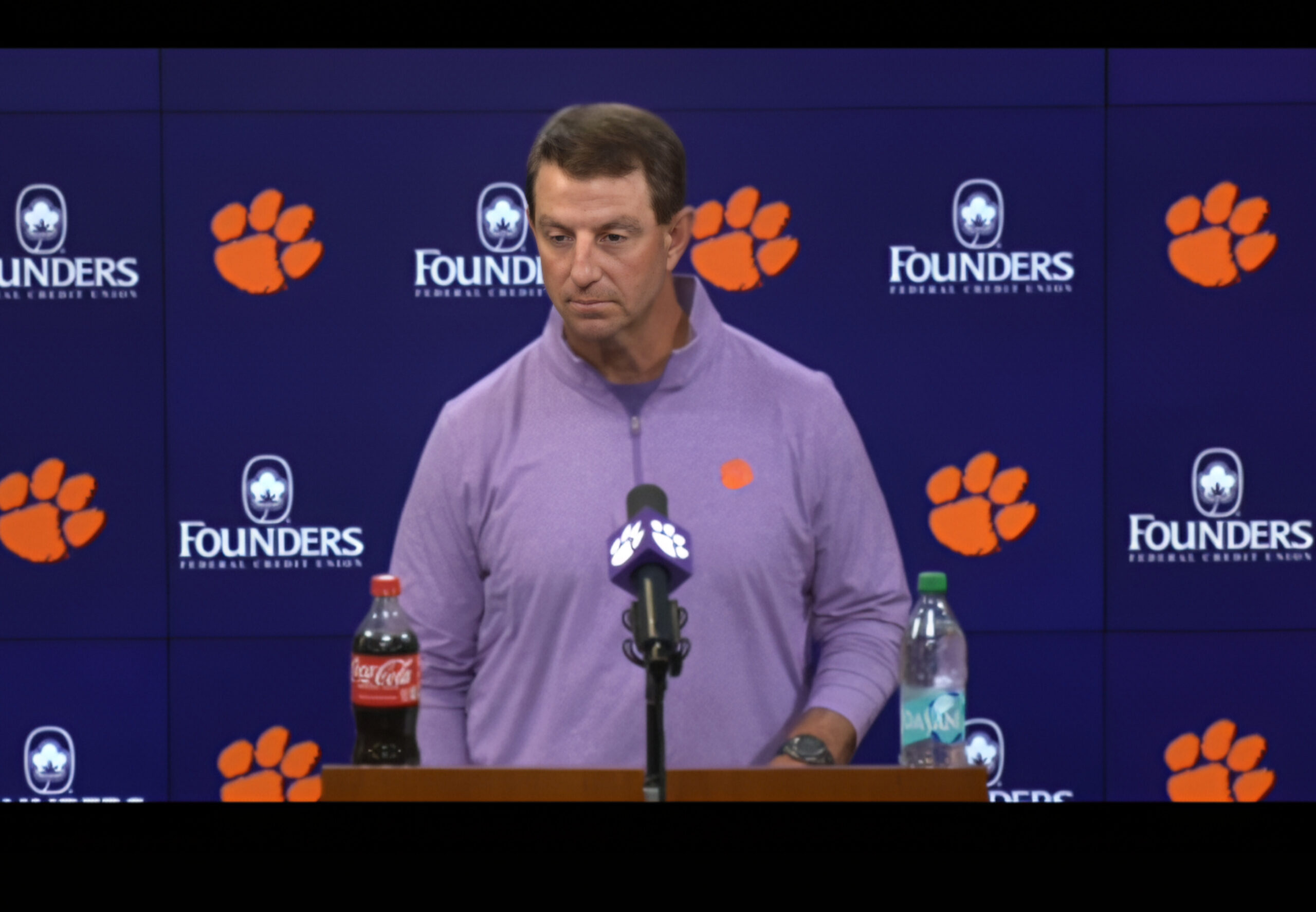
During a recent press conference, head coach Dabo Swinney affirmed his preference for the Saturday date, emphasizing community impact and recruiting logistics. “I have always voted for it on Saturday here,” he remarked. “This is a small town… a lot of businesses depend on these game days.”
But both institutions now appear willing to explore Friday kickoff, particularly when the game is hosted by South Carolina. As the contract notes: the game may be held on Nov. 26 or Nov. 27 in 2027, both dates falling in the Thanksgiving weekend window.
What’s Driving the Change?
1. Television & Viewership – Thanksgiving weekend is prime real estate for sports networks. A Black Friday game could capture audiences looking for marquee events post-Turkey Day, bringing both schools into a larger spotlight.
2. Financial Upside – The Friday date opens the door to expanded corporate sponsorships, advertising premiums, and enhanced ticket-package demand for fans combining holiday travel with game attendance.
3. Recruiting Edge – Exposure matters. For in-state rivals like Clemson and South Carolina, showing up on a national stage on a high-visibility day helps with the pitch to prospective players.
4. Community & Logistics Trade-offs – With the shift come logistical challenges: student travel, campus operations, local business impacts, and tradition versus change. Swinney was blunt: the Saturday date has supported community rhythms in Clemson.
Community Reaction: Excitement Meets Skepticism
On one hand, fans across social platforms are already speculating: imagine tailgates, holiday-weekend energy, and one of college football’s big rivalry games as part of a broader national spectacle. On the other, local businesses and long-time supporters are raising red flags: Will moving to Friday disrupt travel, student attendance, or shift revenue away from the game’s traditional Saturday ecosystem?
One Columbia small-business owner, speaking anonymously, summed it up: “It could be great for traffic and exposure. But if the fan base shrinks because of the date, the economic boost might not land the way they expect.”
Tradition vs. Transformation
The Tigers-Gamecocks rivalry has deep roots. The series dates back to 1896 and long ran uninterrupted until recent disruptions. Changing the date is loaded. Tradition says Saturday. Transformation says future growth.
Coach Swinney’s stance suggests that for Clemson at least, Saturday remains the preferred setting when hosting — partly to protect “game-week economics” in the town. Yet the contract indicates flexibility when South Carolina hosts. That suggests an evolution: perhaps Clemson retains Saturday advantages at home, while Carolina leans into the primetime Friday slot in ‘27.
Implications for the ACC and Beyond
This scheduling wrinkle is less about one rivalry and more about the shifting business of college football. The Atlantic Coast Conference and its member schools increasingly view marquee rivalry days as brand events. By positioning a big game on Black Friday, the conference aligns itself with national broadcast patterns (think SEC’s Black Friday games, etc.).
Furthermore, the move signals to fans, recruits, and media that college football is no longer simply about tradition — it’s about timing, exposure, and revenue streams. Rivalries will increasingly be treated as entertainment assets to be optimized, not just rival-school fixtures to be maintained.
What to Watch For
Formal Announcement: When will Clemson and South Carolina officially confirm or decline the Black Friday date?
Fan Ticketing Trends: Will early fan packages show uptake or hesitancy for a potential Friday game?
Local Economy Signals: Are hotels, restaurants, and businesses prepping for the extra traffic of a holiday weekend game?
Recruiting Communication: Will either school highlight the unusual date as a recruiting point of emphasis?
Broadcast Partnerships: Which network secures the rights? Will kickoff times be adjusted to avoid conflict with other major matches?
The Big Picture
If the Tigers and Gamecocks do take the field on Black Friday in 2027, it won’t just be a quirky date change — it will mark a symbolic shift in college-football culture. The rivalry will remain fierce, the traditions will still resonate, but the context will have expanded. A Thanksgiving-weekend festivity, rather than just a Saturday game, could turn fan tails into destination events.
For the fans, this means bigger media presence, potential travel + holiday combinations, and possibly a new tradition of Thanksgiving-weekend rivalries. For the schools, it means elevating a classic game into a national spectacle. And for college football watchers, it signals the sport’s evolution from storied Saturdays to strategically-placed spotlight events.
One Clemson alumnus put it simply: “If you’re working the Friday after Thanksgiving anyway, you might as well watch Tigers-Gamecocks in prime time.”
🧠 Takeaway: The rivalry isn’t going away. But its timing — and possibly its meaning — could. As college football adapts, one thing remains constant: when Clemson and South Carolina meet, the stakes are huge. Now, it might just be on a Friday.
