


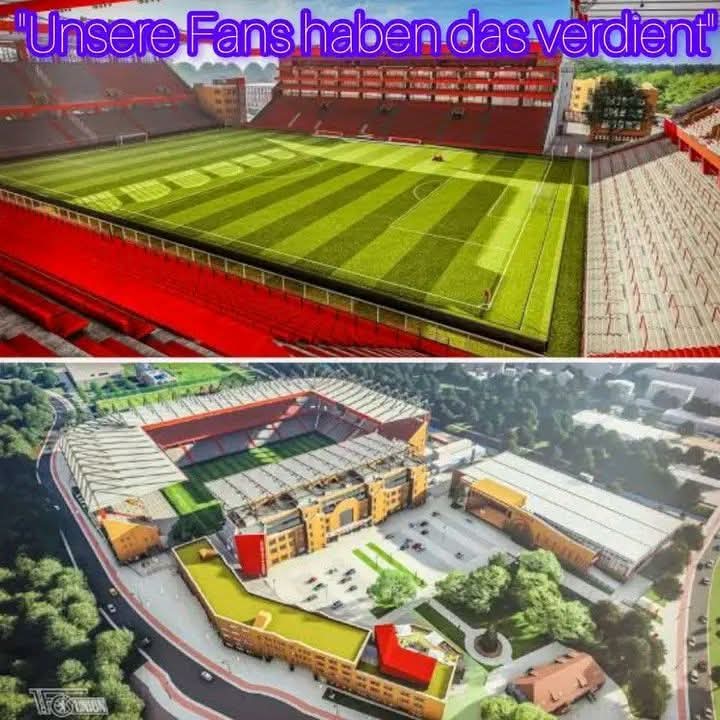
A New Chapter for a Timeless Fortress: Union Berlin’s Stadium Renovation
Berlin is buzzing with excitement for fans of 1. FC Union Berlin. The club, known for its passionate following and deep-rooted traditions, has officially unveiled ambitious plans for a comprehensive renovation of its iconic home, the Stadion An der Alten Försterei. For the “Eisernen” (The Iron Ones), this is more than just a construction project; it is a careful balancing act between preserving the soul of a century-old landmark and securing a modern future for the club.
The stadium, nestled in the Berlin district of Köpenick, has been the spiritual home of Union Berlin and its predecessor clubs since its doors first opened in 1920. Over the last 105 years, the venue has grown organically, shaped by the dedication of its fans and the club’s remarkable journey from local underdog to Bundesliga mainstay. Its history is written in the layers of its structure. The stadium has undergone several significant renovations and expansions, with notable projects completed in 1955, 1970, 1983, 2000, and most recently in 2009. Each era added a new chapter, transforming a simple sports field into the unique, enclosed bowl that today is revered across Europe for its unmatched atmosphere.
However, with success comes the need for evolution. The current plans for a “comprehensive renovation” aim to address the infrastructure challenges of a stadium that has grown piecemeal over a century. While the club has not yet released every technical detail, the stated goal is to modernize the facility while fiercely protecting the characteristics that make it special: the steep stands that put fans inches from the pitch, the iconic forest backdrop, and the infamous “Waldseite” (Forest Side) terrace, which currently serves as a standing-room section for the most vocal supporters.
The renovation is expected to focus on several key areas. Safety and accessibility are paramount; the existing structures need to be brought to the highest modern standards to accommodate the club’s growing fanbase. Additionally, there is a pressing need to expand hospitality and press facilities to meet Bundesliga and potential European competition requirements. Perhaps most critically, the club must decide the fate of the standing-room areas. As a symbol of Union’s working-class identity, preserving a large standing section is non-negotiable for the members, yet it must be done in a way that complies with modern safety regulations.
What sets this project apart from typical commercial stadium developments is the involvement of the Union Berlin supporters. True to the club’s ethos of “Eisern Union” (Iron Union), the renovation is expected to rely heavily on fan participation. Historically, Union fans have not only financed projects but have physically built parts of the stadium with their own hands, most notably during the 2009 renovation that saw thousands of volunteers help construct the current main stand. It is highly anticipated that the club will again call upon its members to contribute, ensuring that the “new” stadium retains the authentic, grassroots spirit that defines 1. FC Union Berlin.
As the plans move forward, the message from the club is clear: they are not building a sterile, modern arena. They are renovating a home. The Stadion An der Alten Försterei will continue to stand as a fortress in the forest, ready to carry the echoes of Union’s past into its next century.
