


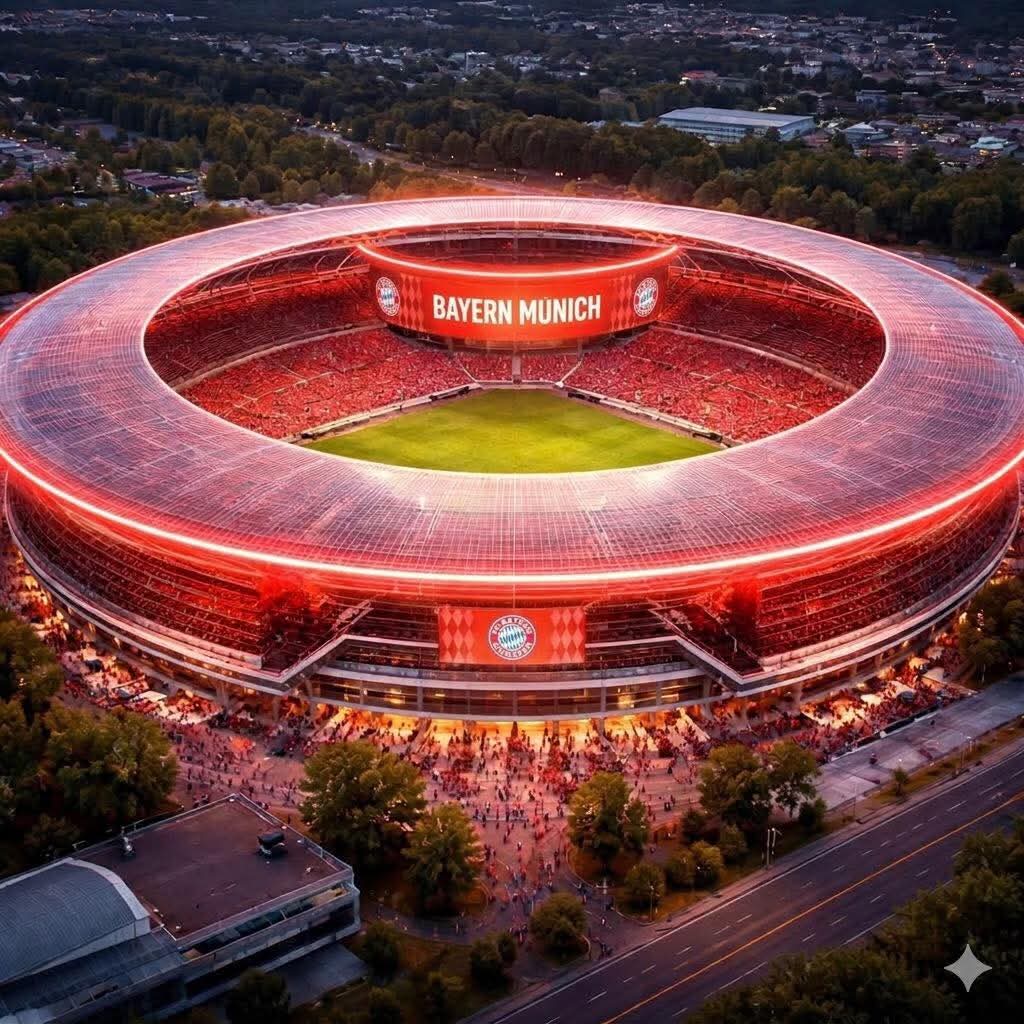
FC Bayern Munich’s $450 Million Stadium Revolution: A New Era for the Allianz Arena
FC Bayern Munich is once again making headlines with a groundbreaking announcement that will shape the club’s future. According to reports, the German record champions are launching a massive $450 million investment project focused on a comprehensive “stadium revolution.” While the Allianz Arena is already regarded as one of the world’s most iconic football stadiums, this ambitious plan aims to transform it into the most advanced, sustainable, and fan-friendly venue in Europe.
The centerpiece of the project is a technological overhaul. Bayern plans to install a next-generation LED facade, turning the stadium’s famous exterior into a dynamic, high-definition display surface capable of showing real-time match data, sponsor messages, and fan art. Inside, a state-of-the-art 360-degree ribbon board and a fully integrated 5G network will allow for seamless connectivity, enabling fans to order food, view instant replays, and access augmented reality features directly from their seats.
Sustainability is another pillar of the investment. The Allianz Arena already runs on green energy, but the new funds will add a massive photovoltaic system on the roof, rainwater recycling for pitch irrigation, and geothermal heating for VIP areas. Bayern’s management has stated that the goal is to make the stadium the first carbon-neutral arena of its size in the Bundesliga by 2028.
Fan experience is being radically reimagined. A new “Red Mile” promenade inside the concourse will feature interactive museum exhibits, e-sports lounges, and a vertical garden showcasing the club’s history. The safe-standing “Südkurve” area will be expanded and equipped with personalized digital lockers and dedicated fast-access gates. For international visitors, real-time translation earpieces will be available for rental, allowing non-German speakers to follow stadium announcements and fan chants.
Critics, however, question the price tag. At $450 million, this investment rivals the entire original construction cost of the Allianz Arena (€340 million in 2005). Some fans worry that increased hospitality and premium seating could drive up ticket prices. Bayern has responded by promising that affordable season tickets for standing areas will remain untouched, and that the project will be funded through club reserves and a low-interest green bond, not by raising matchday costs for ordinary supporters.
The project is expected to begin in the summer of 2026, with the first phase completed before the 2027–28 season. If successful, the revamped Allianz Arena will not only secure Bayern’s status as a commercial and sporting powerhouse but also set a new global benchmark for what a modern football stadium can be—blazing fast, deeply green, and built entirely around the fans who fill it every week. For now, Munich waits with anticipation as its beloved club once again pushes the boundaries of the beautiful game.
