


Written by SportMics —Sports Amplified
As the 2025 college football regular season barrels toward its final stretch, the College Football Playoff rankings released November 18 have thrown a spotlight on the SEC like never before. Between top-10 dominance, rising narratives, and shifting fortunes, the conference is both commanding the national stage and navigating a tense playoff landscape.
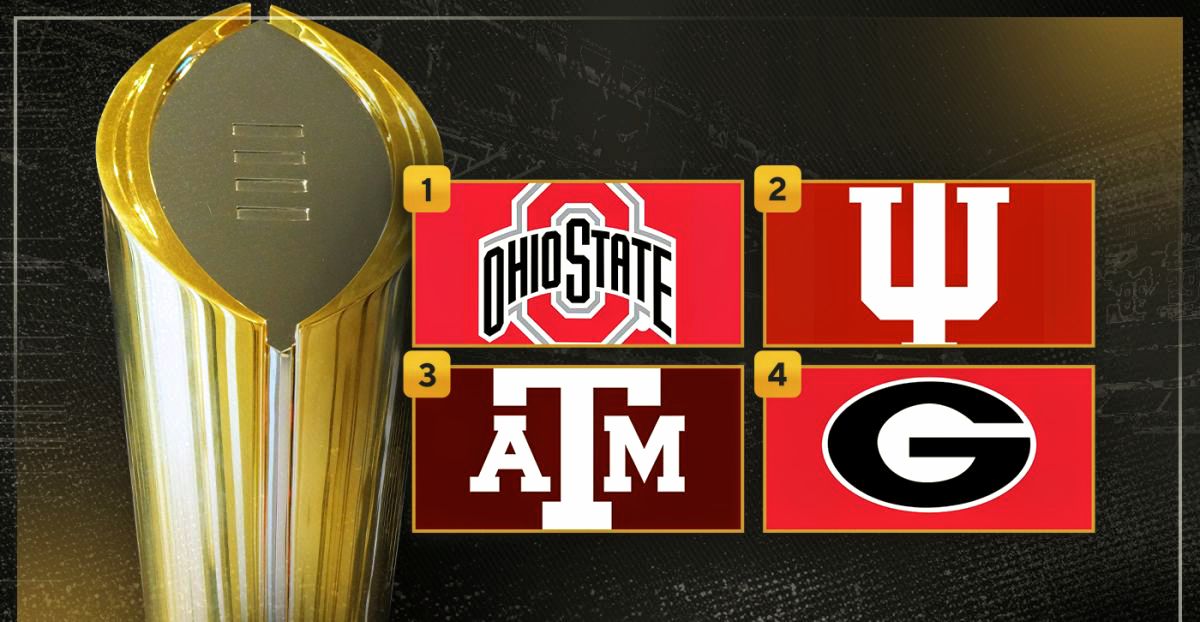
At the top of the list, Ohio State holds No. 1, followed by Indiana at No. 2, Texas A&M at No. 3, and Georgia at No. 4. Meanwhile, programs like Texas are watching their playoff hopes slip, underscoring just how critical late-season performances have become in the battle for positioning and national prestige.
Texas A&M: Resilience Keeps Them in the Top 3
Texas A&M’s ranking at No. 3 is a testament to resilience and high-stakes performance. After a nerve-wracking 31–30 comeback victory over South Carolina, the Aggies showcased the kind of determination that committee members and analysts reward.
CFP committee chair Hunter Yurachek, according to KBTX, noted that while A&M’s first-half performance was shaky, the second half was dominant, reflective of the capabilities expected from a top-three team. This duality — early vulnerability followed by decisive mastery — paints a picture of a team capable of overcoming adversity, a trait the committee increasingly values in evaluating playoff-worthiness.
Despite the strength of record, some analysts have raised questions about A&M’s remaining schedule. November’s non-conference matchups, often perceived as weaker, are under national scrutiny for potentially impacting the committee’s perception of strength. Nevertheless, the Aggies’ demonstrated grit and tactical execution have solidified their position, keeping them a major playoff contender.
Georgia: Consistency at the Edge of the Top 4
Just behind Texas A&M, Georgia sits at No. 4, maintaining its status as a powerhouse in a conference loaded with talent. Georgia’s late-season performances have reinforced their reputation for consistency and elite execution.
For Georgia, the challenge is maintaining momentum while avoiding the pitfalls of complacency. Each remaining game in November carries added weight, not merely for wins, but for narrative and performance perception. In a conference as competitive as the SEC, even a team with a strong résumé cannot rest on historical reputation alone; the national committee evaluates context, margin, and sustained excellence.
The National Rankings: Power, Pressure, and Perception
Beyond the top four, the CFP rankings have highlighted the wider landscape of playoff contenders and hopefuls:
Ohio State continues to anchor the rankings at No. 1, setting the benchmark for excellence.
Indiana at No. 2 demonstrates the rising influence of non-traditional power programs, further complicating the national picture.
Texas, once a contender, has seen its playoff hopes fade following a loss to Georgia, illustrating the high stakes of late-season games.
This shifting hierarchy underscores the fragility of playoff positioning and the importance of every game in shaping committee perception. The rankings don’t just measure wins; they capture momentum, resilience, and strength of record, offering a snapshot of how teams are perceived entering the season’s critical final stretch.
The SEC’s Top-to-Bottom Influence
The SEC’s footprint in the top 10 remains substantial. Analysts point to a scenario where, should current trajectories hold, the conference could claim five of the top 10 spots, including Texas A&M, Georgia, Ole Miss, Oklahoma, and Alabama. This level of representation reflects both the depth and the competitive intensity of the league, reinforcing the SEC’s historical reputation as the nation’s premier conference.
However, depth alone does not guarantee playoff security. Bracket busters, such as Auburn, Missouri, and LSU, loom as potential disruptors. Their remaining matchups could influence the national rankings by creating unexpected losses, reshuffling top positions, and impacting perceptions of SEC strength relative to other Power Five conferences.
The Stakes of Late-Season Matchups
November is now widely regarded as the decisive month in the CFP era. With rankings established but not cemented, every game serves as both a contest and a statement. For top SEC programs, this dual purpose carries immense weight:
1. Texas A&M must leverage its strength-of-record profile to maintain top-three status while proving that resilience in close games translates into playoff readiness.
2. Georgia needs to sustain consistent, dominant performances to solidify national perception.
3. Alabama and Ole Miss are under pressure to finish strong, as committee evaluations fluctuate based on late-season metrics.
For lower-tier SEC programs capable of bracket disruption, the same games represent opportunities to leave a lasting mark — either by creating upsets or by influencing narratives about the relative strength of the conference.
Perception vs. Reality: The CFP Committee Lens
The committee evaluates teams holistically. Wins alone are insufficient; context matters. Strength of schedule, in-game adversity, margin of victory, and late-season performance all influence playoff decisions.
In this framework, Texas A&M’s comeback over South Carolina is more than a win — it’s a demonstration of poise under pressure, which the committee factors heavily into evaluations. Conversely, weaker non-conference opponents or “cupcake games” can create perceived softness, even for otherwise elite programs. Analysts argue that these elements, while subtle, can influence seeding and even selection.
Conclusion: SEC at a Crossroads
The November 18 CFP rankings highlight the SEC’s dominance and vulnerability simultaneously. Texas A&M’s top-three status, Georgia’s consistency, and the looming presence of bracket busters underscore the conference’s high stakes. Each late-season game carries weight far beyond the scoreboard, shaping narratives, influencing committee perception, and ultimately determining playoff inclusion.
In 2025, the SEC doesn’t just participate in the national playoff conversation — it defines it, balancing depth, competition, and the drama that has become synonymous with Southeastern Conference football. As the regular season races toward its climax, the national spotlight shines brighter than ever on the conference that could place multiple teams among college football’s elite — if they can navigate the pressure of November successfully.
