


Written by SportMics —Sports Amplified
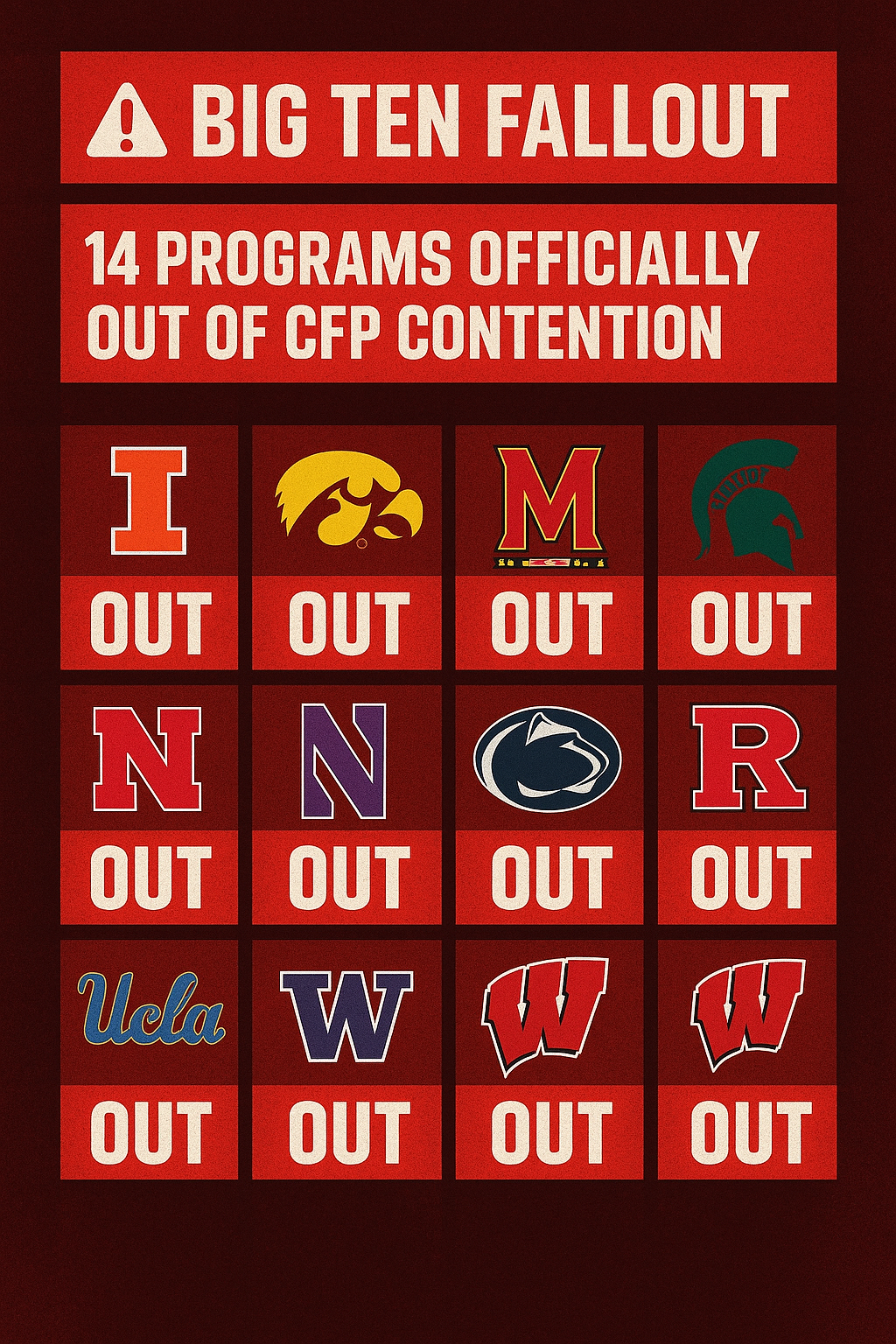
As the 2025 college football season nears its final stretch, the College Football Playoff (CFP) picture is becoming sharply defined — and for many traditional programs, the news is grim. According to the latest projections, 14 Big Ten teams have been officially ruled out of playoff contention. The list reads like a cross-section of historical and emerging programs: Illinois, Iowa, Maryland, Michigan State, Minnesota, Nebraska, Northwestern, Penn State, Purdue, Rutgers, UCLA, Washington, and Wisconsin.
This elimination underscores the ruthless calculus of modern playoff selection, where talent alone is not enough. Every loss, every schedule misstep, and every missed opportunity can spell the difference between contention and disappointment. Here’s a full look at what this means, how these teams landed here, and the human side of this inevitable purge.
The Numbers Behind the Exclusion
The CFP committee evaluates teams based on a blend of win-loss record, strength of schedule, conference standing, and timing of key defeats. For this group, several common factors led to their exclusion:
Multiple Losses: Each team has suffered defeats that make them mathematically incapable of reaching a top-12 berth, whether due to early-season slip-ups or late-season collapses.
Conference Strength: Competing in the Big Ten, where powerhouses like Ohio State and Indiana dominate, makes margin for error slim. Close losses can be fatal in committee evaluations.
Insufficient Signature Wins: Without victories over highly-ranked opponents or conference rivals at critical junctures, these teams lacked the résumé punch necessary for at-large consideration.
External Competition: Across other conferences, bubble teams like Michigan, USC, and Oregon are gaining ground, tightening the competitive landscape.
Even for programs with proud histories and storied traditions, the expanded playoff format demands more than consistent performance — it demands peak performance against elite opposition at the right times.
Breaking Down the Teams
Here’s a closer look at why each program falls outside playoff contention this season:
Illinois: Despite moments of promise, Illinois’ inconsistency and losses against ranked opponents made it impossible to break into the playoff conversation.
Iowa: The Hawkeyes fell victim to late-season misfires, including their fourth loss, which undermined their previous strong standing.
Maryland: With a tough schedule and several close losses, Maryland’s résumé couldn’t match the elite teams vying for the final spots.
Michigan State: While competitive in stretches, Spartans’ losses to conference peers left little room for playoff qualification.
Minnesota: A solid program but plagued by early setbacks and a lack of marquee victories, Minnesota is out.
Nebraska: The Cornhuskers faced a challenging schedule that exposed gaps, particularly in head-to-head matchups critical to committee evaluation.
Northwestern: Narrow defeats, like their 24-22 loss to Michigan, kept them competitive but ultimately outside the top 12.
Penn State: A combination of mid-season losses and inconsistency relegated the Nittany Lions to the “out” category.
Purdue: Despite flashes of potential, Purdue could not string together enough high-quality wins to remain relevant.
Rutgers: A challenging season with multiple defeats put them mathematically out of contention.
UCLA: Transitioning into the Big Ten has been rocky; the Bruins’ losses to top-tier competition prevent playoff qualification.
Washington: Similarly, the Huskies’ season included too many defeats to maintain a top-tier position.
Wisconsin: The Badgers struggled against ranked opponents and couldn’t generate enough momentum late in the season to stay in the playoff hunt.
More Than Just Numbers
Being “out” of playoff contention doesn’t reduce the effort, passion, and stakes involved. For players, coaches, and fans, this announcement is more than a statistic — it’s an emotional inflection point:
Players: For seniors and NFL prospects, the focus shifts to leaving a legacy, performing in remaining games, and competing in prestigious bowl matchups.
Coaches: Leadership now means keeping morale high, managing development, and preparing for the next season while navigating the disappointment.
Fans: Supporters face the duality of pride and frustration — their teams fought hard, but in the unforgiving environment of modern CFP evaluation, effort alone isn’t enough.
These eliminations also illustrate the sheer competitiveness of college football today: even historically strong programs must constantly innovate and execute at the highest level to remain in national contention.
Implications for the Big Ten
With 14 teams out, the Big Ten’s playoff landscape narrows sharply. Only a handful of programs — notably Indiana, Ohio State, and Oregon — remain viable playoff candidates, emphasizing the disparity between elite and mid-tier teams in one of the nation’s strongest conferences.
Playoff Focus: The remaining teams must capitalize on every opportunity and dominate in the conference championship to secure or improve playoff positioning.
Bowl Season Impact: While out of CFP contention, these programs still have stakes in bowl games, rankings, and national perception. Strong performances can enhance recruiting, program reputation, and momentum heading into 2026.
Conference Reputation: Big Ten’s strength ensures that even “out” teams contribute to the perception of the league as competitive and formidable, making victories over top programs all the more significant.
Key Takeaways
1. Consistency Alone Isn’t Enough: The CFP rewards teams that peak at the right time against elite opponents.
2. Timing of Losses Matters: Early losses can sometimes be mitigated; late-season defeats are far more damaging.
3. Competition is Fierce: The expanded playoff format increases the stakes for both at-large teams and conference leaders.
4. Human Stories Endure: Even outside the playoff, these teams’ narratives — grit, resilience, and growth — remain compelling for fans, media, and college football culture.
Bottom Line
The exclusion of Illinois, Iowa, Maryland, Michigan State, Minnesota, Nebraska, Northwestern, Penn State, Purdue, Rutgers, UCLA, Washington, and Wisconsin demonstrates how high the bar is for CFP contention. For these programs, the season is far from over — there are bowl games to play, legacies to cement, and lessons to carry into the future.
While the playoff dream is over for this group, their contribution to the drama, competitiveness, and excitement of the 2025 season cannot be understated. College football thrives on these narratives: the triumphs, near-misses, and battles fought week after week. And for these programs, the opportunity now shifts toward preparation, pride, and positioning themselves for a stronger run in 2026.
