


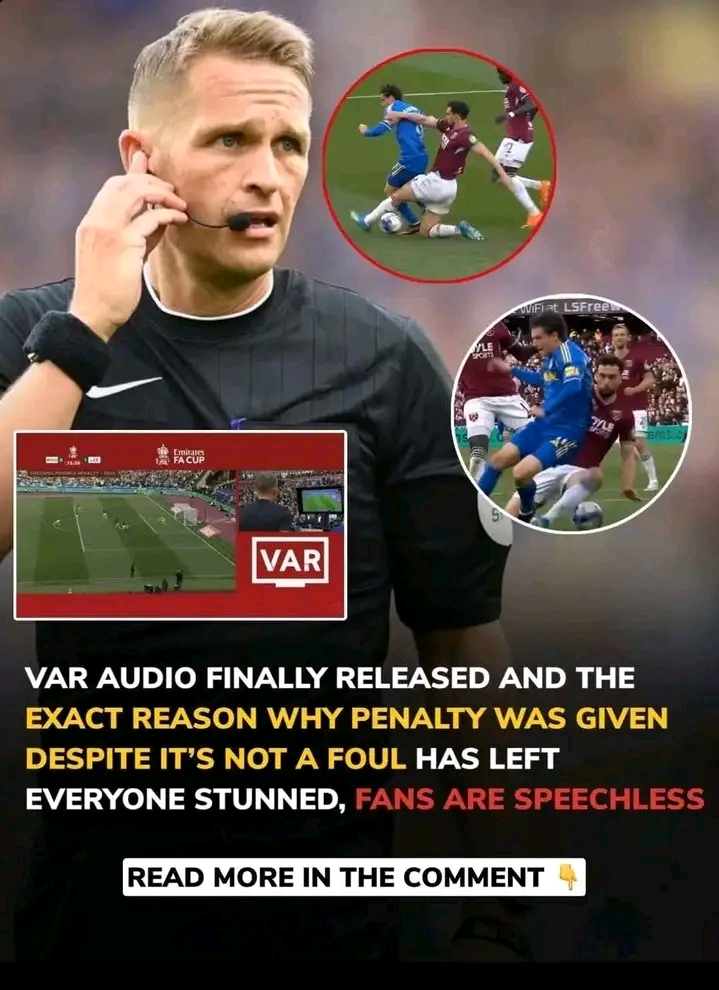
Tension has risen across the fanbases of Leeds United and West Ham United following the release of a controversial audio clip linked to a recent match incident. The recording, which many supporters had been waiting for, was expected to bring clarity to a moment that left players, fans, and pundits confused. Instead, it has only deepened the debate.
During the match, a key decision sparked immediate reactions, with many questioning how and why the call was made. At the time, both sets of supporters expressed frustration, with social media quickly filling up with clips, opinions, and theories. The expectation was that once the audio between match officials was made public, it would provide a clear explanation of the thought process behind the decision.
However, the release of the audio has had the opposite effect. Rather than resolving doubts, it has introduced new questions. Many fans have pointed out inconsistencies in the communication, while others feel that the explanation given does not fully align with what was seen on the pitch. The gap between expectation and explanation has become the central issue driving the ongoing reaction.
The role of the The Football Association has also come under scrutiny. As the body responsible for overseeing officiating standards and providing transparency, their explanation was expected to calm the situation. Instead, it has led to further confusion, with some supporters arguing that key aspects of the decision-making process were not adequately addressed.
For fans of Leeds United and West Ham United, the incident has become more than just a single match moment. It has evolved into a broader conversation about consistency in officiating, communication between referees, and the effectiveness of post-match explanations. These are issues that have been raised repeatedly in modern football, particularly with the increasing use of technology and audio transparency.
Players and coaching staff are also indirectly affected by such controversies. Decisions that influence match outcomes can have significant implications, from points on the table to overall momentum in a season. When clarity is lacking, it can create frustration not just among supporters but within teams as well.
Social media has amplified the situation further. Clips of the audio, fan reactions, and expert opinions are circulating widely, turning the incident into a trending topic. The phrase “more confused than before” has been echoed by many, highlighting how expectations of transparency have not been met in this case.
At the same time, there are voices urging caution. Some analysts point out that interpreting referee communication is not always straightforward and that decisions are often made under intense pressure in real time. While this perspective adds balance, it has not fully eased the frustration felt by many fans.
Ultimately, the controversy surrounding the audio release reflects a deeper challenge within football, balancing transparency with clarity. While making such recordings public is intended to build trust, it can have the opposite effect if the explanations do not resonate with what fans believe they witnessed.
For now, the debate continues. Supporters of both Leeds United and West Ham United remain engaged in discussions, waiting to see whether further clarification will be provided or if the incident will simply become another unresolved talking point in the ongoing conversation about officiating in football.
